



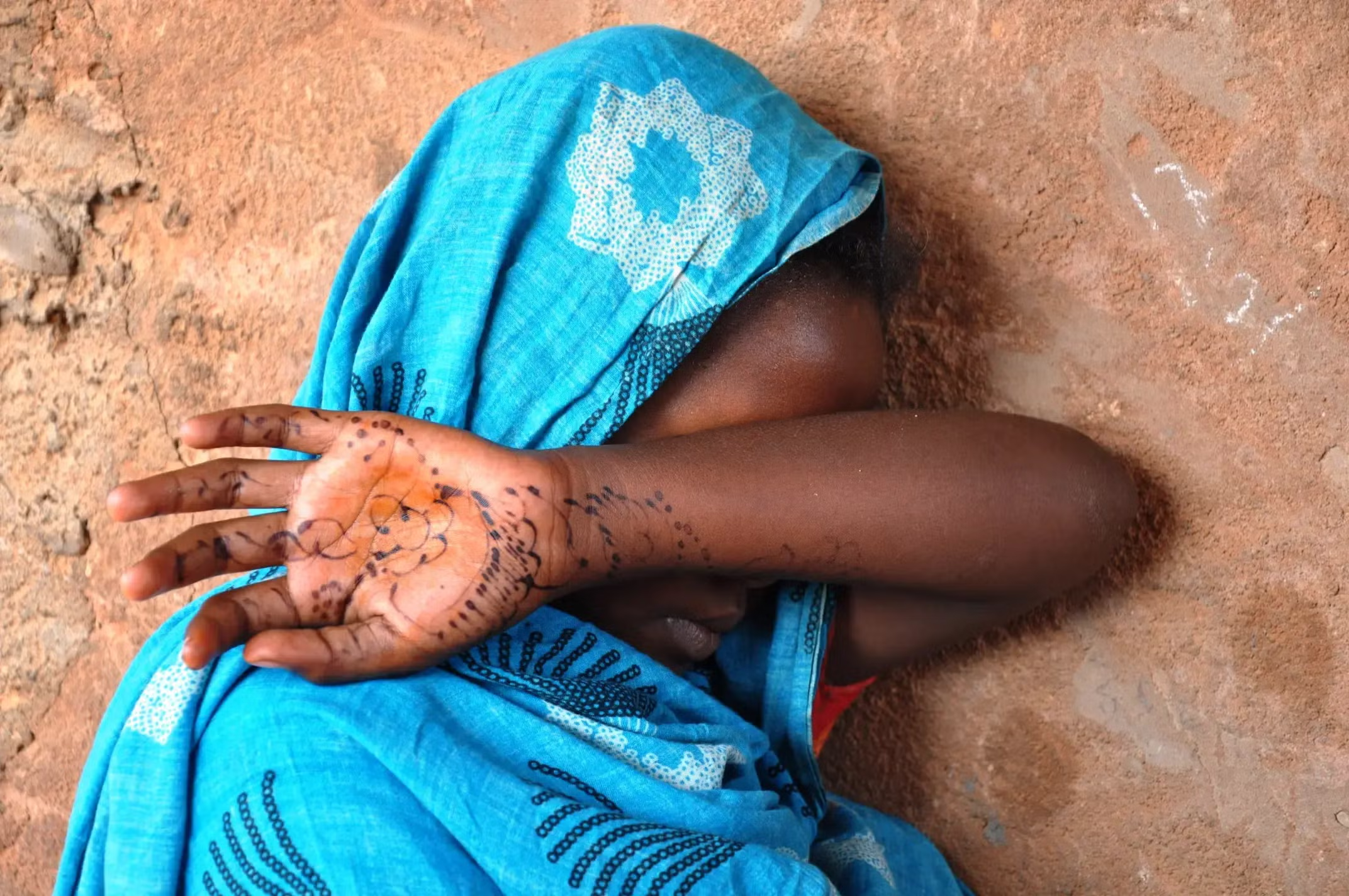
ZANZIBAR: The government, the European Union and UN Women are expanding joint efforts to combat gender-based violence (GBV), focusing on youth engagement, prevention and access to support services in the semi-autonomous archipelago of Zanzibar.
More than 200 university and vocational students took part in an awareness event organised alongside the Sauti za Busara, one of Africa’s leading music festivals, reflecting a growing strategy to use cultural platforms to address social challenges and promote gender equality.
Organisers said the initiative aims to empower young people to challenge harmful social norms, recognise abuse and play an active role in preventing violence against women and girls. The programme combined panel discussions, storytelling and live performances to encourage open dialogue and build awareness.
UN Women Programme Specialist Lucy Tesha said youth participation is central to long-term prevention efforts.
“We came together to organise community mobilisation events targeting youth, highlighting their essential role in ending gender-based violence,” she said, adding that empowering younger generations can help shift attitudes and strengthen community resilience.
The European Union said the campaign forms part of its wider Gender Transformative Action: Breaking the Glass Ceiling programme, which seeks to tackle structural gender inequality and expand opportunities for women and girls. Since 2025, similar outreach initiatives have reached thousands of people across Zanzibar, connecting survivors with services such as legal support, counselling and protection mechanisms.
“These events also connect women and children experiencing violence with critical services, including police, legal aid, social services, one-stop centres and civil society organisations,” said EU representative Chiara Guidetti.
Gender-based violence remains a major global concern. According to United Nations agencies, one in three women worldwide experiences physical or sexual violence during her lifetime, with significant social and economic consequences. Governments and international organisations increasingly emphasise prevention, education and community engagement as key pillars of response.
At the Zanzibar event, artists and youth advocates highlighted the importance of addressing discrimination and harassment in professional spaces, particularly in creative industries.
Singer-songwriter Alamoka said women pursuing careers in music often face exploitation and unequal treatment.
“We face harassment even when we’re just looking for jobs. People often ask for something extra in return for opportunities,” she said, calling for stronger protections and equal opportunities for women.
Officials said engaging young people through music and creative expression helps break stigma and encourages broader community participation. The approach reflects a wider shift towards integrating cultural engagement into social development programmes.
Partners plan to build on the momentum with a youth-centred concert scheduled for March 2026 as part of Women’s Month activities, expected to attract more than 1,000 participants.
Officials said sustained partnerships between governments, international institutions and civil society are essential to strengthening prevention efforts and supporting victims, while promoting long-term social change.
They added that empowering youth and advancing gender equality are critical to building inclusive societies and supporting sustainable economic and social development across Africa.



